
Find out about next year’s Craft of Shoemaking Award here.
2026 WINNER
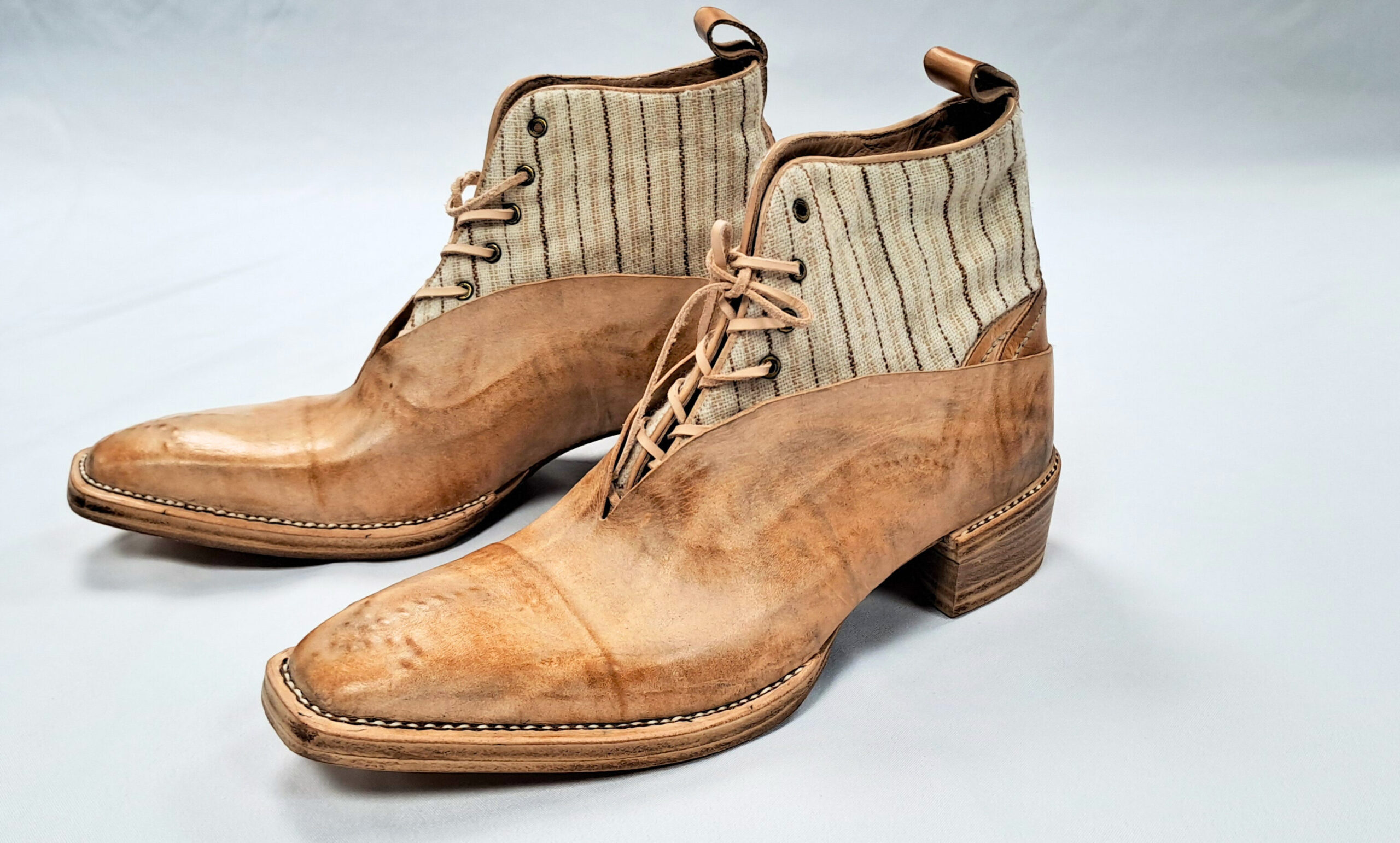
FIRST – Matthew Gill

Matt recently completed the Cordwainer Footwear BA at the London College of Fashion.
For his final major project, he used theory as an excuse to practice his making and to learn as much as he could about the process of shoemaking. He “explores an incomplete practice of making that embodies confusion to enforce problem solving” to highlight the idea that the shoe embodies who made it. The materialisation of the shoe makes it not just an object of desires, but an object of skills, failures, affordances and tactile engagement – elements which he then incorporates into them. Matt sees learning an entire process as a way to truly know yourself.
He has been working as a shoe repairer throughout his studies, solidifying his knowledge of footwear construction, which gives him the opportunity to practice his skills. After university he will continue his work at a sample and manufacturing studio just off Brick Lane making shoes for films and other independent designers.
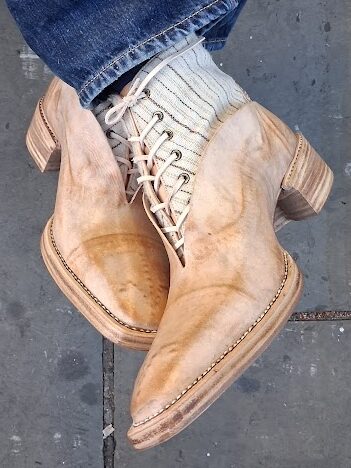
MAKING:
- Matt’s boots are made of veg tan leather and Welsh wool.
- They have French binding around the topline and the pieces are reinforced with saddle stitch.
- The upper is concealed by a seamless whole cut which was marked out and cut while it was lasted on the upper.
- The lasting allowance was then turned out so that the upper could be whipstitched to the midsole
- Matt built a fiddle waist before attaching the sole
- The heels are built on a rand stitched to the first lift and the heels were then built layer by layer.
- The soles and heels are finished with a tan stain and neutral polish.
SECOND – DAMON MA
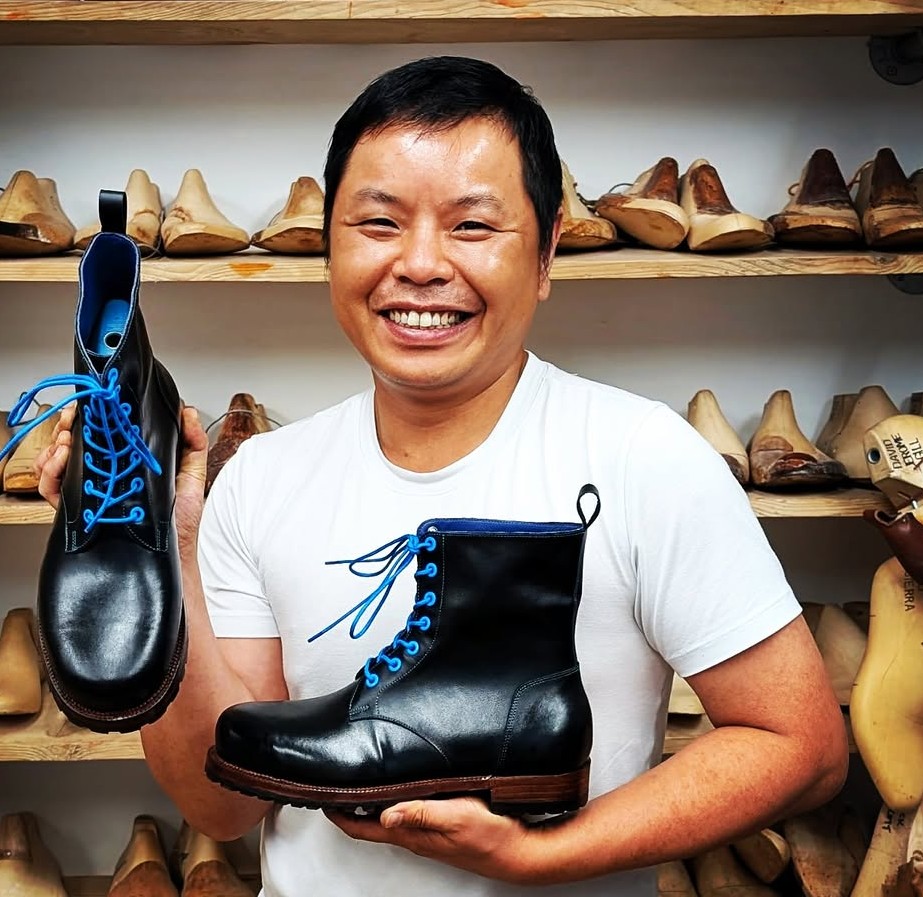
Damon is a full-time engineer who studies and practises shoemaking in his spare time. He has always liked shoes (he has over 50 pairs) and wanted a more personal way to express himself through them, which led to his interest in shoemaking. In 2019, Damon took some months off work to focus on learning the craft, completing courses with I Can Make Shoes, Thomas Rowe from Parachute Collective, with us at Carréducker, and Steven Lowe from Crispinians. Since then, he’s made over 50 pairs of trainers using cemented construction and around seven pairs of traditional hand-sewn shoes through ongoing evening classes again, with us at Carréducker.
Damon enjoys working with his hands and learning traditional crafts, taking short courses in hat, glove and bag making. His short-term goal is to use and wear only items he’s made himself, while his long-term ambition is to open a shop offering bespoke handmade wearables such as hats, gloves, bags, socks, and shoes.
In his shoemaking journey, Damon aims to further develop his skills in pattern making, last making, and different types of construction techniques (clogs/turn out shoes..etc), including various local methods from Europe, Asia, and America. He also wants to improve his finishing skills. Damon is particularly interested in the use of colour contrast in his designs, and in incorporating more colour into bespoke shoemaking.
MAKING
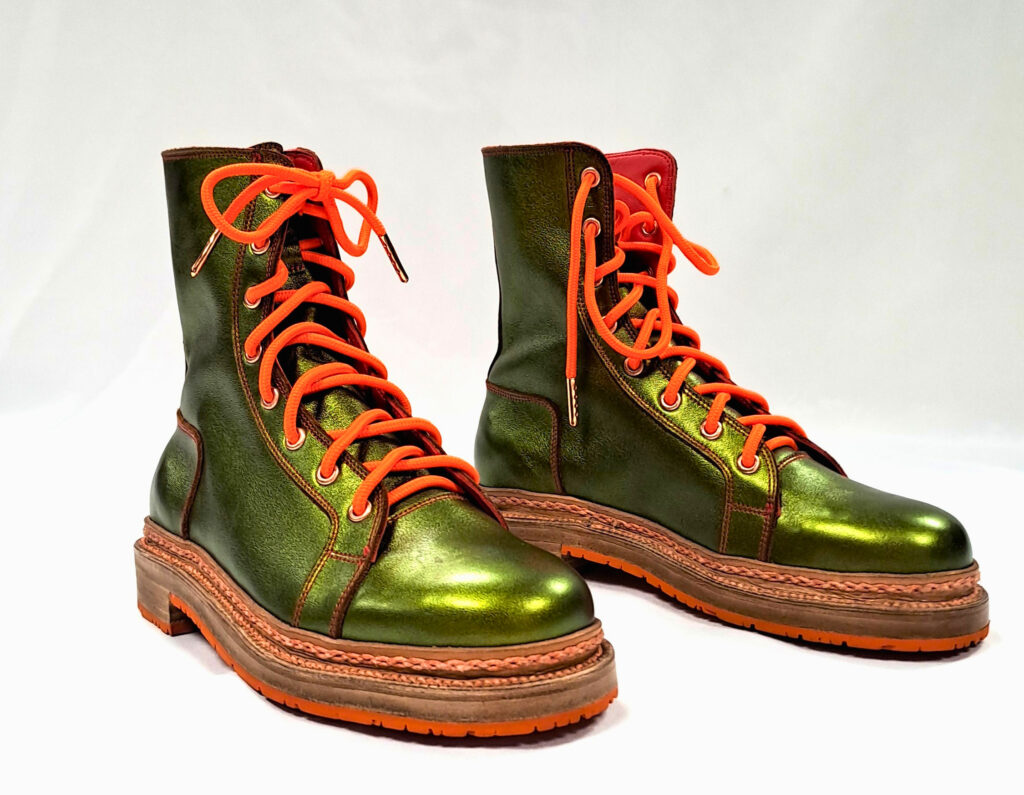
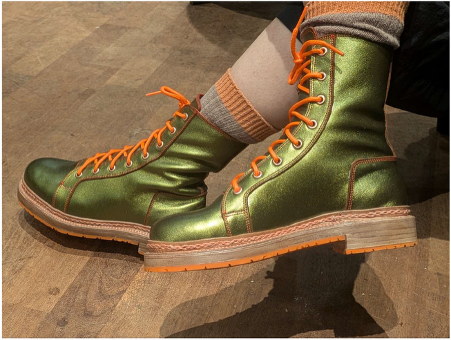
- Damon’s boots are a pair of storm welted Monkey boots
- He drafted the upper pattern from a mean form (w / ball joint adjustment)
- Then hand skived the leather stiffeners and toe puffs
- A holdfast was cut out of the oak bark tanned leather insole
- Damon dyed the stitching threads, twisting, waxing and burnishing them by hand
- The boots were lasted and then sewn together with a storm welt. The stitches were marked out with wing dividers and sewn with decorative threads
- The sole was hand stitched to the midsole
- The heels were built, stacked out of leather lifts
- An orange rubber sticker sole and heel top piece were cemented in place
- Finally he sanded, waxed and finished the edges with polish
THIRD – ROSS EDWIN BELL
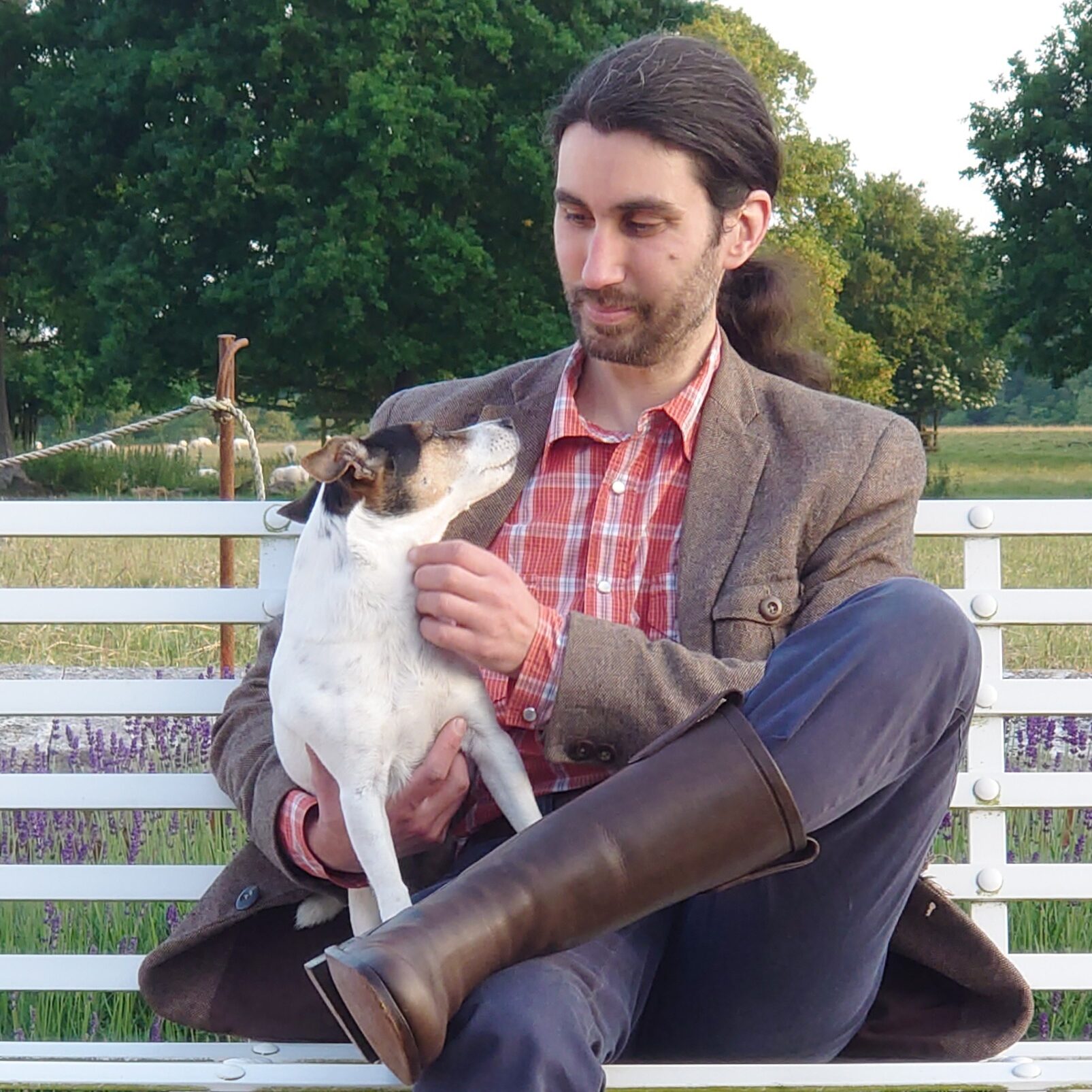
Ross is a self-taught leather craftsman, practising bootmaking with the help of historic books by Leno, Patrick, West and Hasluck. As he hasn’t had the opportunity to study shoemaking in person, he’s learning all that he can from YouTube, Victorian shoemaking manuals and trial and error. He also often refers to an antique pair of Peal riding boots that inspire his boot-making journey.
Last year, Ross entered the inaugural Craft of Shoemaking Award in 2025 with a two-piece Wellington boot called Copenhagen and this year’s entry is just the eighth complete pair of shoes that he has made. He also exhibited a Chelsea boot at this year’s World Championships of Shoemaking this year, which attracted a lot of interest.
Ross came to shoemaking later than most, and wants to show that you are never too old to learn and master new skills. Practising shoemaking in his spare time, Ross has built up an impressive breadth of knowledge, skills and transferrable techniques that are proving invaluable to his own leather work at Edwin Bell Designs.
He plans to continue developing his skills and showcasing his vision of bespoke boot-making to the world.
MAKING
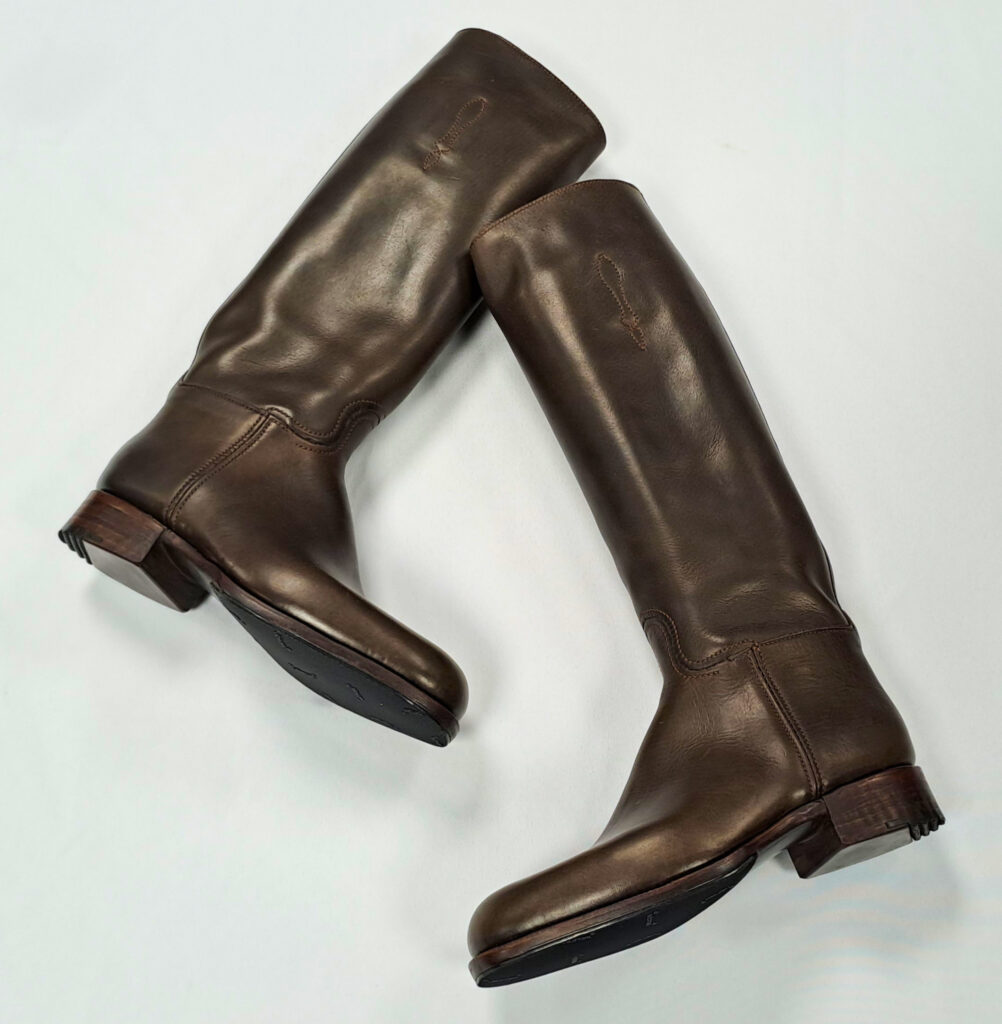
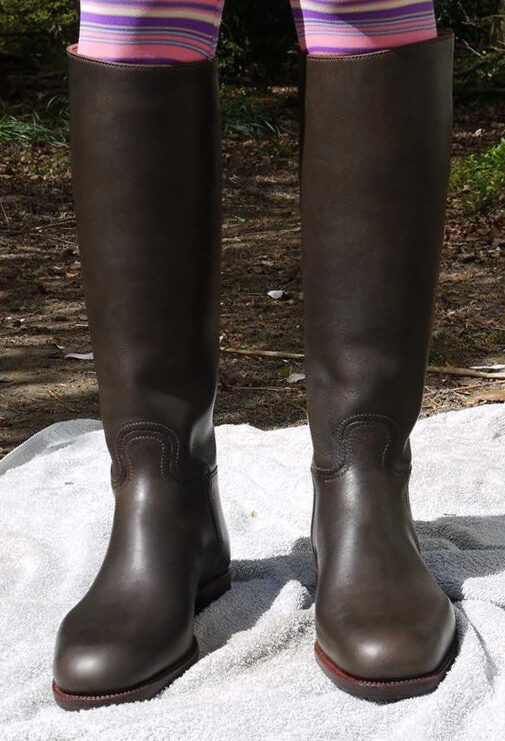
- Ross drafted the upper patterns using pen and paper
- They were marked out and cut (clicked) from the lining and upper leather
- The vamp pieces were then hand crimped (blocked) to mold the curve at the front
- The upper pieces were hand stitched together using waxed linen thread
- The tongue was closed on the inside rather than stabbed on
- The insoles were blocked, shaped and the holdfast cut out by hand
- The boots were fitted with leather counters, stiffeners and toe puffs and hand lasted
- They were stitched with a 360 degree welt, with a German Seat, using waxed linen thread
- The soles were stitched on with a 360 degree concealed channel stitching, using waxed linen thread
- The heels were hand built in stacked leather heel
- The heels and soles were hand finished with a quarter rubber top piece and thin rubber outsole for added traction
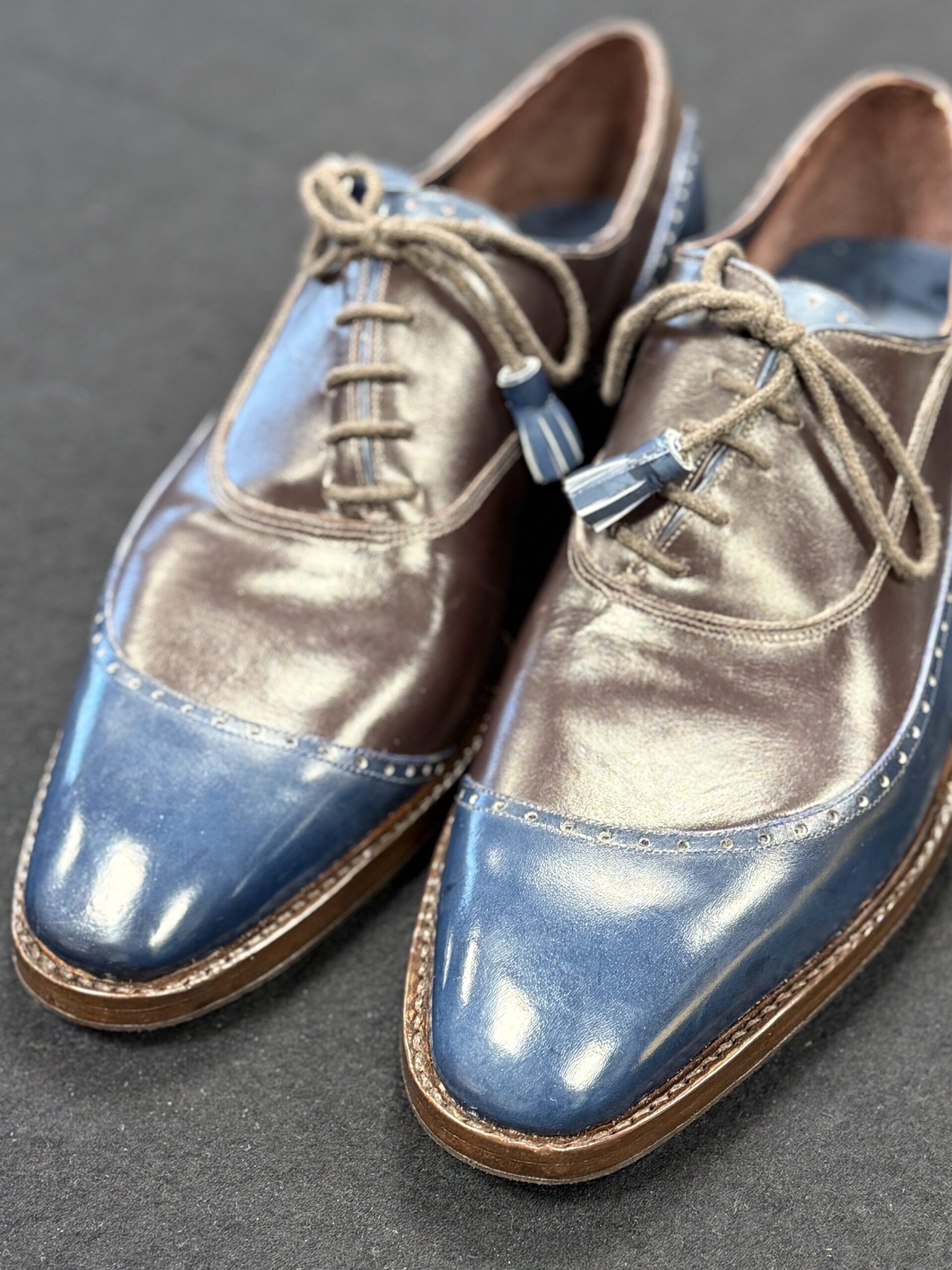
COMMENDATION – Robert Hardy
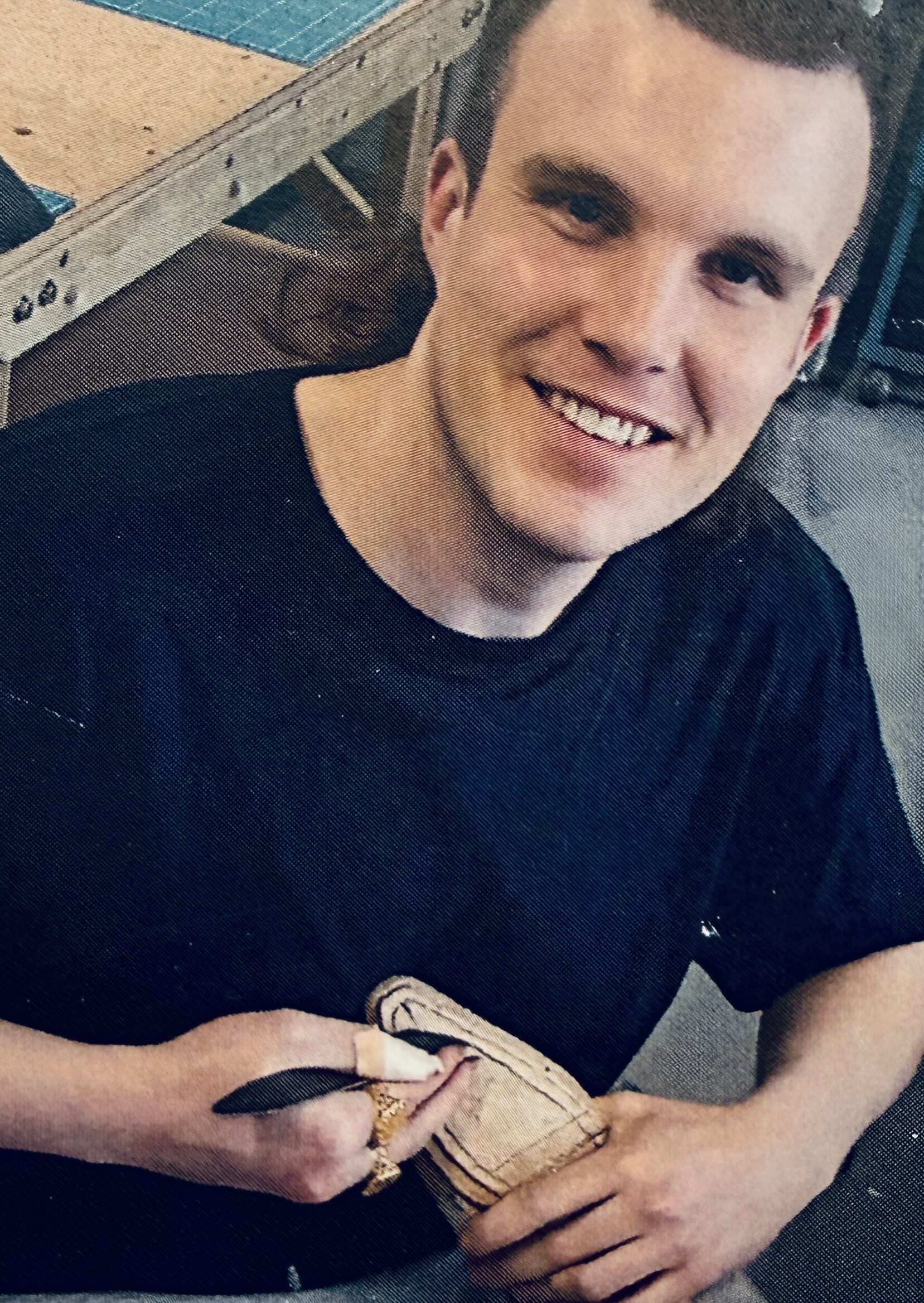
Robert started doing shoe repairs when he was 19 and then decided that he wanted to learn to make shoes.
He went to Capel Manor for a year and then got an apprenticeship at James Taylor & Sons, where he worked for three years. He decided that he then wanted to learn to design shoes and is now studying at London College of Fashion. After he graduates, he plans to pursue his shoemaking passion and ultimately to start his own brand.
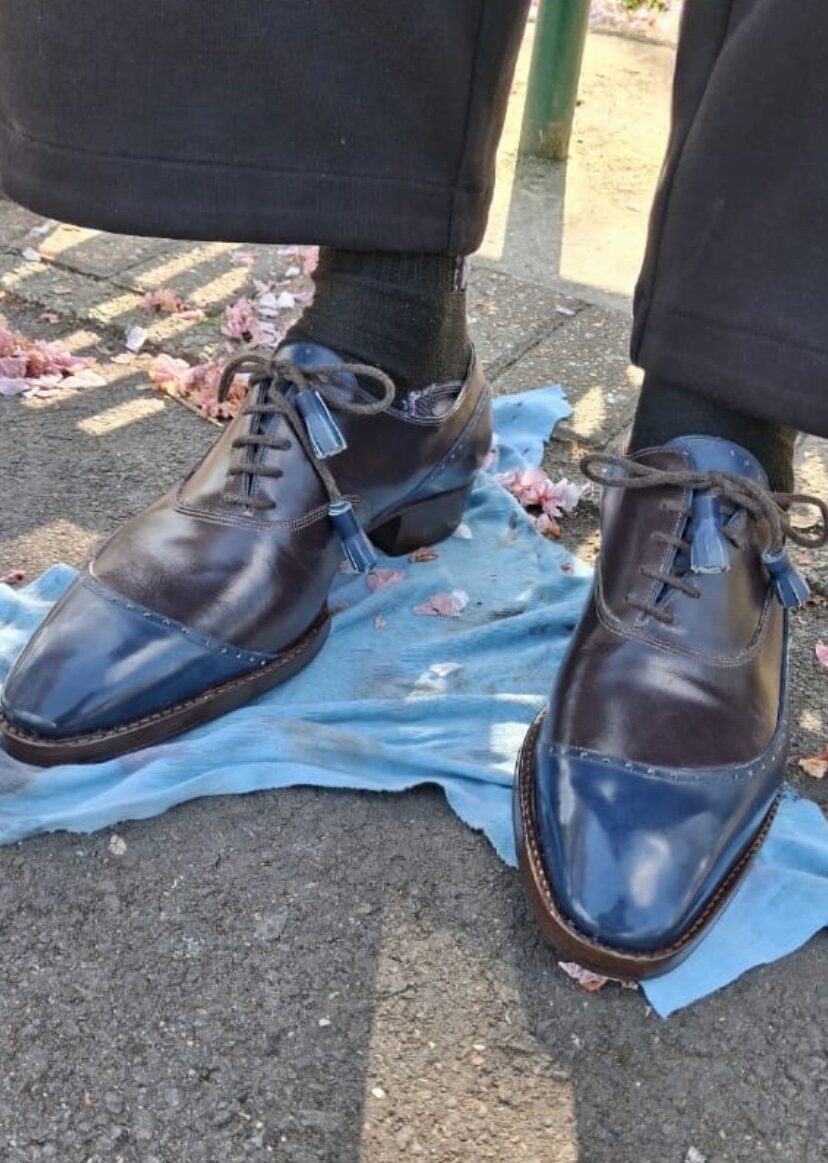
MAKING
- Robert’s design is a two-tone, wrap-around Oxford shoe made on a pair of chisel toe lasts.
- The lasts are bespoke and were made for him by a friend as he has a 6mm leg length discrepancy on his right leg.
- He drew the design onto the last and them made a standard forme and created the pattern pieces.
- He clicked and hand-skived the upper pieces, brogued the toe cap and the tongue and then machine stitched the upper.
- Robert made a leather insole, cut out a rib for the welting to be stitched and hand lasted the upper with a leather stiffener and toe puff. He then added a metal shank with a leather cover and then added more leather to shape the fiddle back waist.
- He added a leather sole, cut out a groove and stitched the outsole to the welt.
- He shaped the fiddle back with the back of the hammer and sanded and dyed the sole.
- He shaped the cuban heel, added a rubber top piece and finished the toe with a mirror shine.
THE AWARD
The Craft of Shoemaking Award was developed by Carréducker and the Worshipful Company of Cordwainers in 2025 to celebrate hand skills and to shine a spotlight on shoemakers in the UK.
The award is open to UK based students (either current or recent graduates), apprentices, cobblers, repairers and non-professional shoemakers and outworkers. (Outworers may work in the trade, but do not sell their shoes at commercial prices / under their own name)
The winner receives a £3000 prize from the Worshipful Company of Cordwainers and 12-days of handsewn shoemaking training with bespoke shoemakers, Carréducker, at their London studio
THE BRIEF
Entrants must produce a PAIR of shoes or boots for men, women or children:
Using any construction methods
That is functional AND wearable
Orthopaedic and athletic shoes are welcome
With emphasis placed on hand skills.
MARKING
Entries are marked out of a maximum of 40 points as follows:
Design & Materials – 5 points
Choice of Last – 5 points
Clicking & Closing (patterns and uppers) – 8 points for techniques / 4 points for execution
Making – 8 points for techniques / 4 points for execution
Finishing – 6 points
Any practical external help saw one point deducted for each section
2026 JUDGING PANEL
The five-strong judging panel’s expertise covers design, last making, closing, pattern making and bottom making.

Fiona Campbell
Fiona Campbell is a much sought-after bespoke footwear specialist and speaker delivering lectures at the V&A and for LCF/UAL in London, Dubai and Singapore.
Her expertise as a designer, closer and pattern maker has seen her train the design team for Dunhill, Manolo Blahnik, Selfridges and Harrods and UK manufacturers such as Bowhill & Elliott and Alfred Sargent.
In 2008, she received the Leathersellers Guild Award for her research into sustainable materials for footwear.
Today Fiona specialises in bespoke pattern making tutoring and continues to pursue her interest in material development.

Sarah Day
Sarah has enjoyed a prolific commercial footwear design career and academic presence in the trade spanning 37 years. She taught at UAL for 20 years and was Course Leader for the BA Cordwainers Footwear course mentoring students and staff alike.
She is an avid supporter of footwear education and positively encourages the fusion of traditional craft skills with new technology in footwear design.
Sarah is an External Examiner at Capel Manor College, has judged the annual Drapers Footwear Awards and Chairs the Cordwainers Trade & Education Committee.

Caroline Groves
Caroline is passionate about creating handmade, bespoke shoes for women of unparalleled quality, striving to achieve museum-worthy results and delighting her clients.
Her work reflects the finest traditions of British bespoke shoe craftsmanship, blended with the fine needlework of Parisian couture. Her creations are borne from over 30 years of experience across the highly skilled disciplines of saddlery, leathercraft and shoemaking, whilst the sculptural elements of shoemaking, an interest in period costume and her Arts and Crafts heritage are a constant inspiration. (Caroline’s great-grandfather was one of the 150 craftspeople to bring the Guild of Handicraft to Chipping Camden in 1902).
Caroline frequently travels to the USA to meet with private clients. Her bespoke creations are regularly exhibited and showcased in museums and have earned numerous awards.

Michael James
Michael is known as ‘the last man of Northampton’ and is Director of Spring Line lasts. He has been with the company for over 40 years, having joined on a youth training scheme in 1983. Michael initially worked across all aspects of the factory before specialising in last making.
He is a highly skilled craftsman – a last model maker and a new model developer – overseeing a team of over 20 people making lasts for some of the UK’s biggest names in footwear – Trickers, Cheaney etc. and wooden lasts for bespoke.
Michael sits on the Cordwainers Trade & Education Committee.
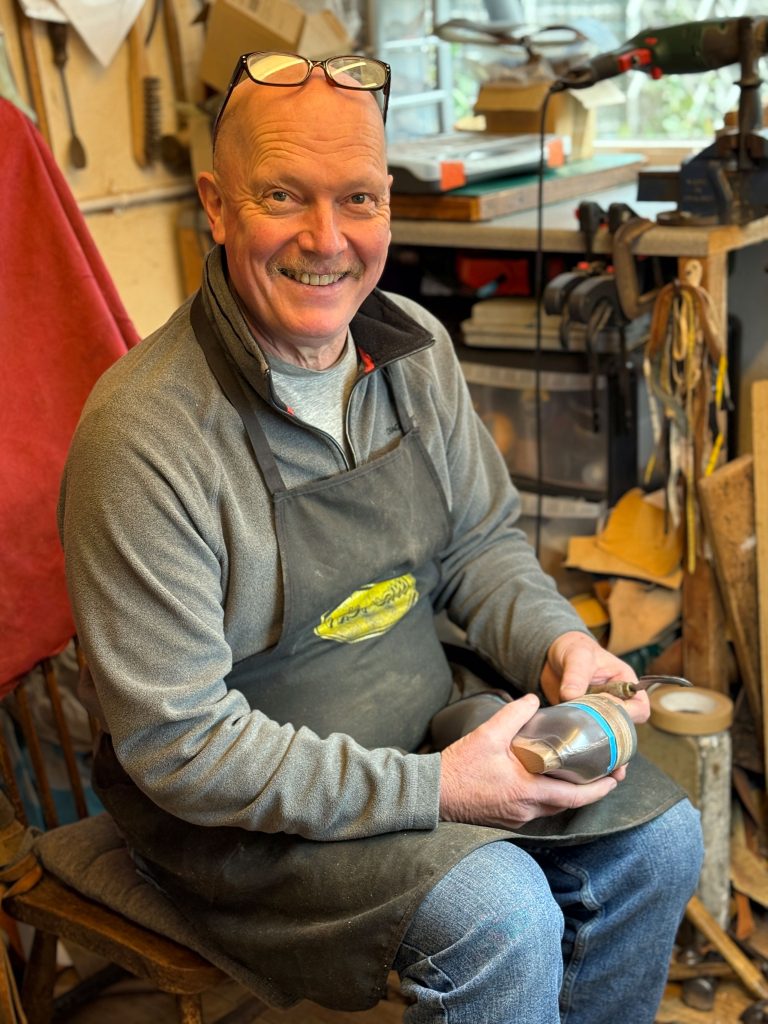
Jim McCormack
Jim McCormack is a legend in handsewn shoemaking having been at the workbench since the tender age of 16 and is perhaps one of the few remaining shoe makers who knows all aspects of “West End” handsewn shoemaking.
A highly skilled maker he has made some of the finest shoes, pumps, slippers and boots for the legendary London bespoke firms including John Lobb and has crafted footwear for the Royal Family. A generous teacher he has passed on those skills by mentoring a new generation of shoemakers.
Jim recently won Heritage Crafts Lifetime Achievement Award. The award celebrates a heritage craftsperson who has demonstrated an outstanding contribution to their specific craft over 25 years or more. It marks a lifetime’s dedication to a particular traditional skill, resulting in a practitioner operating at the highest level, having made a significant impact on the continued high-esteem in which their craft is held.
SUPPORTERS
With thanks to


Follow the Worshipful Company of Cordwainers and Carreducker on Instagram